The One-Battery Year: Reading Real Capacity Loss After 4,000 Harrogate Miles
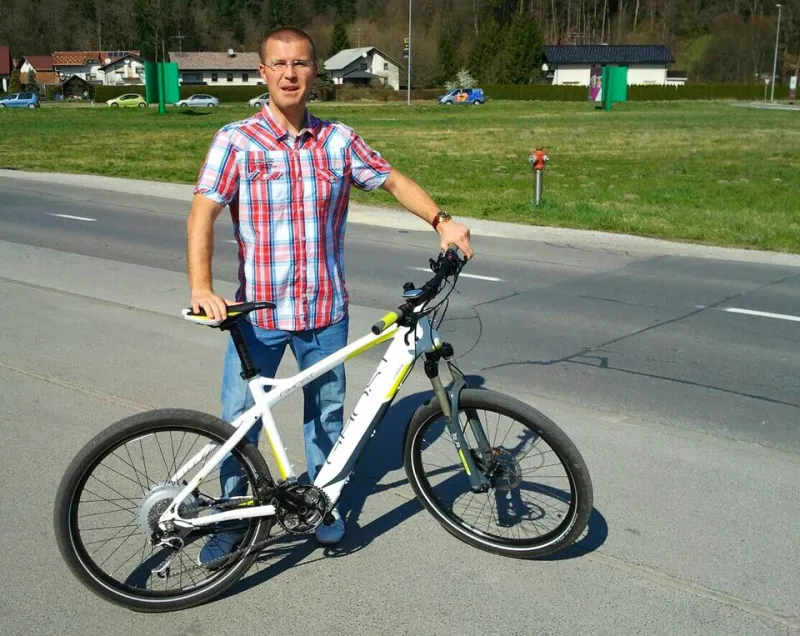
Photo: Petar Milošević, CC BY-SA 3.0, via Wikimedia Commons
Four thousand miles is not a huge e-bike life. It is a year of Bilton-to-town commutes, a few runs to Starbeck, the weekly shop, some weekend loops out towards Ripley and one or two longer Nidderdale days. It is also enough for a battery to show its first real personality. Not failure, not drama, just a slow drift in how much charge it holds and how far that charge feels like it goes.
The bike in question has a nominal 500Wh battery, a middle-of-the-road crank motor and a rider who does not treat it gently but does charge it sensibly. Over 2026 it covered roughly 4,000 miles. This is not a laboratory test. It is a long-term ownership note, with the caveat that every battery, rider and route is different.
What 4,000 miles does to a battery
A 500Wh pack doing 4,000 mixed miles might see somewhere between 120 and 180 partial charge cycles. That is not a huge number. Good-quality cells are usually rated for several hundred full cycles before they fall to around 80% of original capacity, and most riders never get near that in a year.
The honest expectation after one year and 4,000 miles is a measurable loss in the region of 5% to 12%, not a third of the pack. If your range has fallen off a cliff, the battery may not be the first suspect. Cold weather, low tyre pressure, a dragging brake, a heavier load, a new route or a lot more time in turbo will all move the number before the cells do.
Measure the pack, not the mood
The display's range estimate is a guess based on recent riding. It is useful for spotting a trend and useless for a forensic verdict. To separate real degradation from perceived fading, you need a repeatable test. A dealer with a battery diagnostic can do it properly. At home, you can do a rough version with a known loop and a notebook.
Pick a loop you can repeat in similar conditions. Note the temperature, tyre pressure, assist mode and your approximate weight with luggage. Start with a full charge, ride the loop, and record the battery percentage used. Do that three or four times across a few weeks. If the same loop used 28% in spring and uses 34% in November, that is not automatically a dead battery. It is probably temperature, wind and wet roads.
The seasonal range you actually get
In mild weather, this bike would return around 35 to 40 miles on a mix of eco and tour, with the odd burst of turbo on Harrogate's steeper exits. In a cold snap, with a headwind and a loaded pannier, 25 to 30 miles was more realistic. The battery did not lose 10 miles overnight. The conditions changed.
Cold slows the chemical reaction inside the pack, and it also adds heavier clothing, wet tyres and more rolling resistance. A battery that lives in a cold shed will feel softer than one kept indoors. Bring it inside before charging and before a ride if you can. Do not charge a freezing battery straight from the shed. Let it reach room temperature first.
Charging habits that helped
This battery was rarely run to zero. Most days it went from around 60% to 20%, then back to 80% or 90% overnight. Before a longer weekend ride it was charged to 100%, usually the night before. If the bike was going to sit for a week, the battery was left around 50% to 60%, not full and not empty.
That pattern is not magic, but it is kind. Shallow discharges and avoiding long spells at 100% in a hot room are good habits. So is using the charger that came with the bike. Fast chargers and generic replacements can work, but they are not automatically an upgrade.
What the log should look like
You do not need an app. A notes file or a paper diary is enough. Record the date, odometer, battery start and end percentage, assist mode, outside temperature, tyre pressure and a one-line route note. Once a month, ride the same calibration loop and write down the result.
| Date | Odometer | Battery used | Assist mode | Temp | Route note |
|---|---|---|---|---|---|
| 12 Jan | 1,240 | 31% | Tour | 3C | Cold, wet, Bilton loop |
| 18 Apr | 2,410 | 27% | Tour | 12C | Dry, same loop |
| 09 Nov | 4,020 | 35% | Tour | 4C | Windy, new rear tyre |
That table tells you more than a display that says 22 miles one morning and 39 the next. If the same loop at the same temperature starts using noticeably more charge, then you have a conversation to have with a dealer. If it is only winter that looks bad, wait for spring before buying a new pack.
When replacement actually makes sense
Replacement is not about a percentage on a screen. It is about whether the bike still does the job you need. If your commute is 12 miles and the battery comfortably covers it with a 30% reserve in January, you do not need a new battery because it is at 85% of original capacity.
If the pack is below about 70% of original usable capacity, or you cannot complete a regular journey without charging at work, replacement starts to make sense. At 80% to 85%, most riders can live with it. At 90%, you are arguing about the weather.
After a year and 4,000 Harrogate miles, this battery is not asking for retirement. It is asking for the same things it always wanted: sensible charging, a bit of warmth in winter and a rider who checks the tyres before blaming the cells.