The Heavy End of the Hill: Brake Pad Wear on Harrogate E-Bikes and the Check That Catches It Early
Harrogate is not the Alps, but every local ride has a sting in it somewhere. Climb out towards Beckwithshaw, drop down Otley Road into town, or thread through the ups and downs around Pannal and you are asking more of your brakes than a rider on the flat would ever guess. Add an e-bike's extra mass and the motor's habit of pushing your average speed up a notch, and the humble brake pad starts to look like a consumable you should be budgeting for.
Call it the heavy end of the hill. The descents are short, but they come often, and often in wet grit. That combination quietly turns a pad that might last a year on a lighter bike into a part that wants checking every few weeks.
Why an e-bike is harder on brakes
A typical commuter e-bike weighs several kilos more than an unassisted hybrid. That weight has to be slowed every time you approach a junction, a blind bend, or a busy stretch of the Stray. Motor assistance also means you arrive at those hazards carrying more speed than you might on a normal bike, so the brakes do more work in less time.
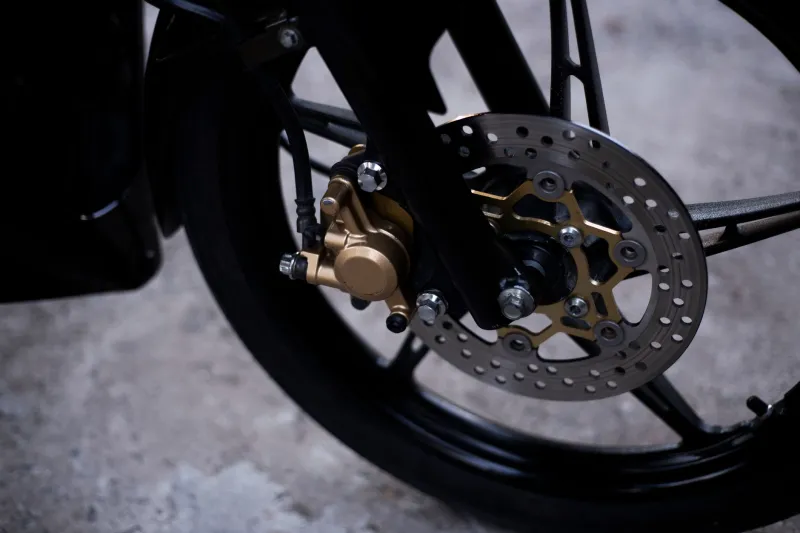
Most e-bikes around Harrogate use disc brakes, and most of those are mechanical or hydraulic discs with pads that sit close to the rotor. That is good for stopping power, but it also means grit from winter roads, leafy lanes and the odd flooded puddle gets worked into the pad surface. Wet grit is abrasive. It wears pads faster and can score a rotor if you leave it long enough.
The five-minute Sunday check
You do not need a workshop stand to catch most problems early. A torch, a clean rag and a few minutes after a ride will do.
First, squeeze the lever. It should feel firm and consistent, not come back towards the bar or feel spongy. If it does, stop riding and get it looked at. Next, look through the gap in the caliper with a torch. You are checking the friction material, not the metal backing plate. As a working rule, pads are ready for replacement when the friction material is down to around a millimetre, though the manufacturer's figure always wins. If you can see the metal spring or backing plate making contact with the rotor, the pad is overdue.
Check the rotor as well. Most rotors have a minimum thickness stamped on them, commonly around 1.5mm. A cheap set of digital calipers is the only honest way to measure it. If the rotor feels deeply scored with a fingernail, or has gone blue from heat, it is worth having a shop assess it. Also look at the pad retaining pin and spring. Corrosion around those small parts is common in a Yorkshire winter, and a sticky pin can stop pads retracting properly.
Finally, spin the wheel and listen. A light rub is normal on some bikes. A metallic grind, a rhythmic scrape or a squeal that appears only when braking is your cue to investigate further.
Warning signs that are easy to miss
A long lever, a grinding noise and visible metal-on-metal contact are the obvious ones. Less obvious is uneven wear. If one pad is worn much more than the other, the caliper may be sticking or misaligned. If the brake feels grabby or snatches at low speed, contamination from oil, chain lube or road spray could be the cause. Glazed pads, which look shiny and glassy, often feel weak when wet.
Harrogate's gritting season adds another layer. The same salt and grit that keeps the roads moving gets flicked into calipers and rotors. A quick rinse with a low-pressure hose after a mucky ride, followed by a proper dry, helps more than most people think. Avoid spraying directly into bearings or hydraulic fittings.
Pads, rotors and the choice that suits your riding
Organic pads are quiet and gentle on rotors, but they wear faster in wet, gritty conditions. Sintered pads last longer and cope better with heat, though they can be noisier and are harder on rotors. Semi-sintered pads sit in the middle and suit many e-bike commuters well. Buy pads that are listed for e-bike use or for your specific brake model. The cheapest unbranded set is rarely a saving when it wears out in a few weeks.
Rotors wear too, just more slowly. Replace them when they are below the minimum thickness, badly scored, or warped enough to pulse through the lever. It is not always necessary to replace front and rear together, but check both. New pads need bedding in: find a quiet, dry stretch and make a series of moderate stops from a sensible speed, avoiding dragging the brakes for long periods.
What a brake job costs around Harrogate in 2026
A pair of decent pads is usually £15 to £35. Fitting at a local shop might add £10 to £25 per end, depending on the brake and how busy they are. A new rotor is commonly £20 to £45, and labour for a front and rear pad change with one rotor could land somewhere around £80 to £140 all in. Prices vary, so ask before booking.
That sounds like a lot until you compare it with the alternative. A pad left too long can ruin a rotor, overheat a caliper and turn a simple consumable job into a much bigger bill. Independent bike shops in and around Harrogate, Knaresborough and Wetherby can handle this work, and mobile mechanics are an option if getting the bike to a shop is the sticking point.
A local habit worth building
You do not need to become a brake obsessive. Just check the pads after a wet week, especially if you have been descending into town from the moors or riding the gritty lanes between Harrogate and Pateley Bridge. If the lever feels different, the brakes sound different, or you cannot remember the last time you looked, book a check. Brakes are consumables on an e-bike. Treating them that way is cheaper than treating them as a surprise.