Winter Rubber for Harrogate E-Bikes: What Actually Helps on Wet Leaves and Grit
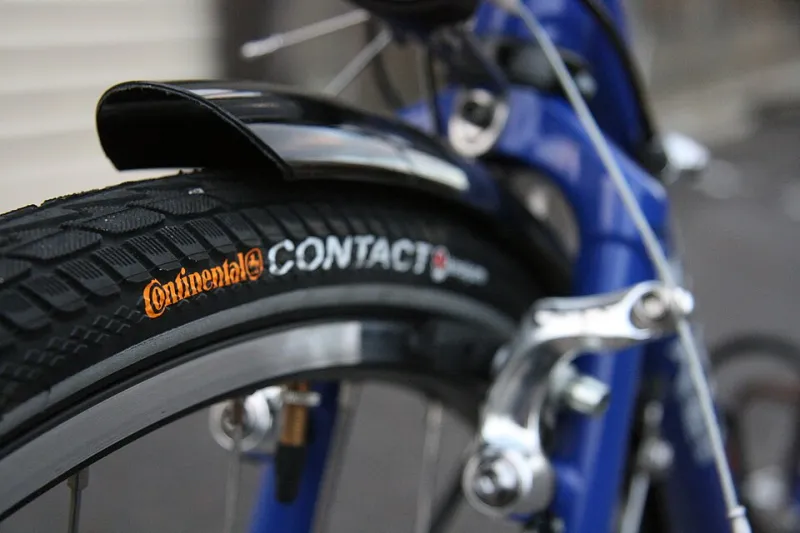
Photo: Gavin Anderson from Bagneres de bigorre, Australia, CC BY-SA 2.0, via Wikimedia Commons
It is 8 November 2026, and the Stray is doing its annual impression of a wet leaf carpet. If you commute from Bilton, nip over to Starbeck or ride out towards Knaresborough, you have probably wondered whether winter tyres are worth the faff. The short answer is that most Harrogate e-bike riders do not need a dedicated set. But most is doing a lot of work in that sentence.
The short answer
For town riding, the stock tyres on a decent e-bike are usually fine in winter, provided they are not worn out and you run sensible pressures. Wet asphalt, cycle paths and the odd gritty lane do not demand a special tyre. What matters more is condition, pressure and how you ride.
If your tyres are squared off, cracked or down to the wear marks, replacing them with something better is a bigger win than buying anything with a winter label. But if you ride untreated lanes early in the morning, use the Nidderdale Greenway through the muddy months, or commute on paths that stay wet and leaf-covered for weeks, a more suitable tyre can add real confidence. For a small group of riders who regularly meet ice on quiet roads, studded tyres are the only thing that genuinely helps.
What winter tyre means for an e-bike
For cars, winter tyres are a compound and tread package. For bikes, it is messier. You will see three broad options. Road or slick tyres have a smooth centre and little tread. They are fast on clean tarmac but less happy in mud. Semi-slick or gravel tyres have a smoother centre with shoulder knobs, which makes them useful on mixed surfaces. Studded tyres have metal studs for ice. They are brilliant on frozen paths and noisy, slow and unpleasant on tarmac.
Compound is just the rubber mix. Softer rubber tends to grip better in the wet and cold but wears faster. Harder rubber lasts longer but can feel skittish. Tread is the pattern. On a wet road, a slick tyre can actually grip well because there is no block squirm. Tread mainly helps on loose, muddy or leafy surfaces by giving muck somewhere to go. That is why a full knobby tyre on a Bilton commute is often overkill, while a slick on a muddy Greenway edge is a false economy.
E-bikes add weight and torque. The rear tyre wears faster, especially if you use higher assist levels. Check for a squared-off profile and any casing damage. A tyre rated for e-bike use is worth having. It is not about speed, it is about load and durability.
Wet leaves on the Stray are not a tread problem
The Stray in November is lovely until you hit a patch of wet leaves on a bend. No tread pattern will make wet leaves grippy. Leaves are slippery because they sit on top of the surface and shear away. The best tactics are slower cornering, gentler braking, avoiding leaf drifts and not leaning the bike over as if it is July. A slightly wider tyre at lower pressure can help the bike feel less nervous, but it will not turn leaves into velcro.
If your route is mostly tarmac and compacted path, keep the stock tyres unless they are worn. Spend the money on a decent pump with a gauge and check pressures weekly. A tyre at 20psi too high will skip about more than a tyre with a different tread.
Gritted lanes and the Greenway
Gritted lanes around Knaresborough and the villages can be abrasive. Grit also collects at edges and in drains, so the slickest part of the lane is often the middle. A tougher casing and some puncture protection matter more than aggressive tread here. Semi-slick or light gravel tyres make sense for riders who mix tarmac with the Greenway and farm lanes.
The Nidderdale Greenway is mostly fine in winter, but after rain the edges can be muddy and cut up. If you ride it regularly, a 40mm-plus tyre with a little shoulder tread and decent puncture protection is a sensible compromise. Full mud tyres are not needed unless you are deliberately heading onto proper off-road trails, and they will feel draggy on the ride back into Harrogate.
When swapping makes sense
Consider a winter-oriented set if your current tyres are worn, cracked or puncturing often. Consider them if you ride before the gritters and regularly meet ice on quiet lanes, or if you use the Greenway and unsurfaced tracks through winter and want more bite. A tougher rear tyre for a heavy e-bike on a hilly commute is another good reason.
Do not bother just because it is November. A new set of tyres costs money, takes time to fit and can change how the bike feels. If you are happy on your stock tyres and they are in good condition, save the cash for brake pads, chain lube and gloves.
Local recommendations
Bilton and central Harrogate commuters should stick with a fast semi-slick or the stock tyres if they have life left. Prioritise puncture protection and correct pressure. If you want an upgrade, a 35-40mm semi-slick is a good all-rounder.
Starbeck and Knaresborough riders using old railway paths and lanes should look at a light gravel tyre with shoulder tread. It will handle grit, damp tarmac and the odd muddy patch without feeling like a tractor.
Nidderdale Greenway regulars should look for a wider semi-slick or light gravel tyre, 40mm or more if the frame allows, with a reinforced casing. Keep pressures a little lower than summer, but not so low that you pinch the tube.
Ice-prone early birds who must ride untreated lanes in freezing conditions should use studded tyres. They are the only real answer. They are slow and noisy, so use them as a second wheelset or accept the trade-off.
The cost and hassle bit
A pair of decent e-bike-rated tyres can cost anywhere from about £50 to well over £120, depending on size and spec. Studded tyres are usually more. Fitting them is a workshop job for some riders and a 20-minute faff for others. You may also need new tubes or to check clearances.
The hassle is real. But so is a slide on wet leaves or a pinch flat on a dark commute. The trick is to match the tyre to the riding you actually do, not to the weather app's dramatic icon.
Bottom line
For most Harrogate e-bike riders, winter tyres are not essential. Good condition, sensible pressure and a bit of caution will get you through November and December. But if your tyres are tired, or your winter riding includes muddy Greenway edges and icy lanes, a more suitable set is money well spent. Buy for the surface you ride, not the season on the calendar.