When Your E-Bike Says No: Finding Real Repair Help Around Harrogate
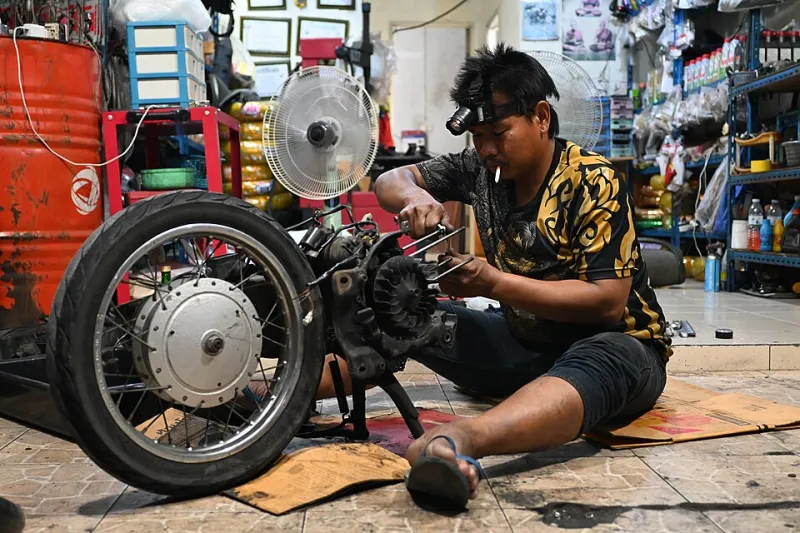
Photo: PattayaPatrol, CC BY-SA 4.0, via Wikimedia Commons
There's a particular kind of gloom that settles in when you're halfway up a rise out of Bilton and the assistance just… stops. The bike still rolls. The lights still come on. But the thing you paid for has quietly gone missing, and you're now pedalling a heavy bicycle in the rain with a nagging suspicion that this is going to cost money.
What follows isn't a list of names. Shops change hands, staff move on, and a recommendation from a stranger on a forum is worth roughly what you paid for it. What's more useful is knowing how the repair landscape around Harrogate actually divides up, what each part of it is genuinely good at, and how to avoid the classic trap of paying for a diagnosis that never really happened.
Start by working out which sort of fault you've got
E-bike problems fall into two rough camps, and they need completely different people.
Mechanical faults are things a competent bike mechanic has handled for decades: gears, brakes, bearings, buckled wheels, snapped spokes, worn tyres, a creak that appears only under load. Nothing here requires a laptop or a password.
Electrical and electronic faults are the motor cutting in and out, an error code on the display, a battery that drops from four bars to one in a mile, a charger that never turns green, a torque sensor that surges, or a walk-assist that has quietly retired. These need a workshop with brand-specific diagnostic tools, software access and — crucially — the insurance and know-how to handle a lithium pack safely.
Plenty of bikes have both going on at once, which is where the finger-pointing starts. A shop that only does mechanical work will fix your gears and hand the bike back still stuttering, and you'll assume they did a bad job. They didn't. They just weren't the right stop on the map.
The high street shop: brilliant for half the job
Harrogate, Starbeck and Knaresborough all have long-established bike shops and they remain the best value for the mechanical half of the equation. A general service, a brake bleed, a wheel true, new cables, a chain and cassette — this is bread and butter, and you'll usually be looking at somewhere between £45 and £75 for a service, with parts on top.
What's changed in recent years is that more of these shops have started politely declining e-bikes altogether. It's rarely snobbery. It's the battery. Storing, charging and moving lithium packs in a small back room carries a real insurance and fire-safety burden, and some owners have decided the margin isn't there. Others will happily do brakes and gears but ask you to remove the battery first, or refuse to touch anything with a motor casing.
So ring ahead. Not to book, just to ask one question: do you work on e-bikes, and how far into the electrics will you go? You'll get a straight answer in thirty seconds, and it saves a wasted Saturday.
The brand specialist: where error codes get read
If your bike uses a Bosch, Shimano, Yamaha or Brose system, the most reliable route is a dealer for that brand, even if it means a trip to Leeds, York or Wetherby. These workshops have the manufacturer's diagnostic interface, they can read the actual fault history rather than guess at it, and they can perform warranty work — which matters enormously if the bike is under two years old.
This is also where battery health checks live. A proper one produces a report: charge cycles, capacity against original spec, cell balance, any recorded over-temperature events. That document is worth having, both for your own peace of mind and because it's the difference between a warranty claim being accepted or shrugged off.
Budget accordingly. A diagnostic is typically £30–£60, and a good workshop will credit it against the repair if you go ahead. Motor bearing servicing tends to land between £80 and £150 depending on the system. A replacement controller or display is usually £90–£180 in parts before labour.
The mobile mechanic: convenient, but ask about scope
Mobile mechanics have multiplied around Harrogate, and for a commuter with a bike that won't fit in the car they're a genuine gift. They'll come to your driveway in Bilton or your flat in town, and for routine servicing and straightforward replacements that's often better value than losing the bike for a week.
The limit is specialisation. A van with a stand and a toolbox can replace a brake pad anywhere; it can't necessarily interrogate a Shimano motor or rebuild a hub motor's internals. Ask directly what they can diagnose on your specific system before you book. If the answer is vague, you're buying a mechanic, not a technician — which may still be exactly what you need.
What a diagnostic should actually involve
This is the part worth being firm about. A real diagnostic is not someone switching the bike on, saying 'that looks like the battery' and charging you forty quid.
It should involve plugging into the system or at minimum reading stored fault codes, checking the battery's reported state of health, inspecting the wiring loom and connectors for chafing or corrosion — a genuine issue on gritty North Yorkshire lanes — testing the speed and torque sensors, and confirming the charger's output. You should get a summary of what was tested, not just what was replaced.
Five questions before you hand over the keys
- Is the diagnostic fee credited against the repair? Get this in writing, even if it's a text message.
- Will you give me a written quote before starting work? Any shop worth using will.
- Do you hold the battery manufacturer's software access for my system? If not, ask what they can realistically diagnose.
- Can I have the old parts back? A reasonable request, and a useful check on whether the work described actually happened.
- What's the realistic turnaround? Parts from Europe can take a fortnight. Better to know now than to discover it on day nine.
One more, less comfortable: ask where the battery will be stored overnight. A shop that answers this casually is telling you something.
Keep your own paper trail
Before the bike goes anywhere, write down what it's doing and when. Does the fault appear only when cold? Only under load on the Otley Road climb? Only after a wash? Does the display throw a code you can photograph? A short log of symptoms, dates and conditions will save a technician an hour of guessing and you an hour of labour charges.
Keep every receipt, too. E-bike repairs are increasingly a paperwork game, and the rider with a tidy folder of invoices has a far easier conversation with a warranty department than the one relying on memory.
None of this is glamorous. But a repair is like a route: the more clearly you know where you're going and what it should cost to get there, the less chance you end up somewhere unexpected, in the rain, pushing.