Two Flights Up: How Harrogate Flat-Dwellers Can Charge an E-Bike Without Risking the Hallway
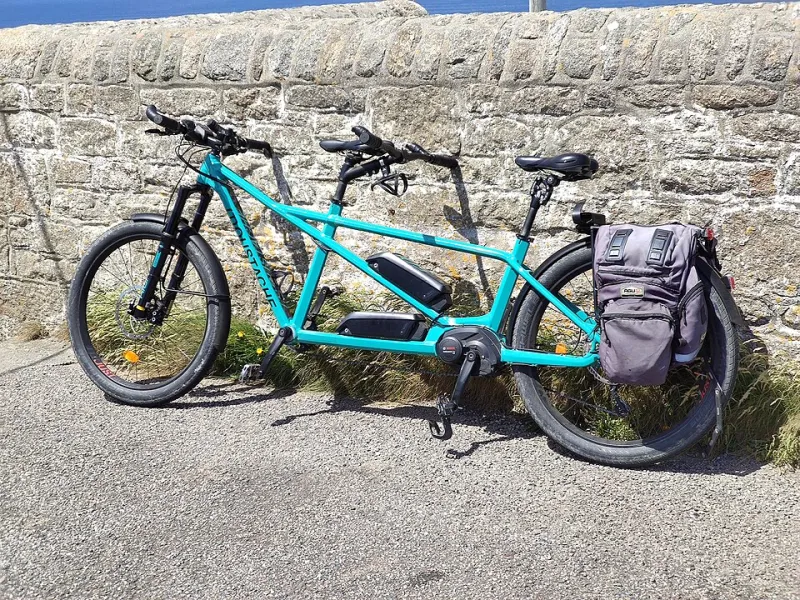
Photo: FrogsLegs71, CC BY-SA 3.0, via Wikimedia Commons
Harrogate is a town of Victorian terraces, converted villas and flats above shops, and very few of them come with a socket in the yard. If you live on the second floor of a West Park conversion, or in a Jennyfields flat with a shared entry and a bike store that never quite got built, charging an e-bike takes ten minutes of planning before it takes five hours of electricity.
This is the practical version. No lectures, just what actually works when the only power point is in your kitchen and the hallway is shared with six other households.
Start with the battery, not the bike
Most e-bike batteries lift out with a key and a firm pull, and weigh somewhere between 2.5kg and 4.5kg — roughly a big bag of sugar, but denser and more expensive. Learn how yours releases before you buy, not after. Some integrated designs need the bike tipped onto its side, and a few need a dealer.
If yours is fixed in place, this guide still applies. You will simply be carrying the whole machine upstairs, and a 24kg hybrid up a narrow Victorian staircase is a two-person job and a scratched skirting board waiting to happen. If that sounds grim, a removable battery is worth prioritising over almost any other feature on your shortlist.
Two small habits make the whole routine easier. Carry the battery in a padded bag or with the supplied handle — not by the cable, and not by the release catch. And never plug a cold battery straight in after a frosty ride; let it sit at room temperature for an hour first, because condensation inside the casing is a genuinely bad idea.
The four charging rules that matter more than the rest
- Charge where you would notice a problem. A kitchen worktop or a hard floor in a room you sit in, not a hallway, not under the stairs, not a cupboard beside the front door.
- Never charge in a communal area. Shared landings, stairwells and entrance halls are escape routes. Flats have burned because of this, and your lease will almost certainly forbid it.
- Use the charger that came with the bike. A £30 eBay special is the single most common factor in battery fires. Match the voltage and the plug exactly.
- Charge awake, unplug when done. Overnight charging while you sleep is the scenario fire services warn about most often, and there is no benefit to leaving a full battery on the mains for another five hours.
North Yorkshire Fire & Rescue's line on lithium batteries is blunt and worth reading in full: charge on a hard, non-combustible surface, keep the battery away from soft furnishings and anything with a carpet pile, avoid extension leads and coiled cable reels, and make sure there is a working smoke alarm between you and the door.
Fire risk, without the hysteria
Lithium battery failures are rare, and they are also fast and hot when they happen — a thermal runaway gives off dense smoke and can spread in seconds. That is the reason for the fuss, not a reason to avoid e-bikes.
Three practical safeguards go a long way. Do not charge in a room with only one exit. Do not charge a battery that has been dropped, pierced or submerged, or one whose casing has swollen — take it to a dealer instead. And if a battery starts hissing, swelling or smoking, get everyone out, close the door behind you and call 999. Do not attempt to move it.
Getting it up the stairs without wrecking your back
Take the battery off at the bike, not at the top of the stairs. A rucksack carries 3kg far more comfortably than one hand, particularly on a twisting staircase with a banister on one side. If you ride a step-through frame, carry the bike vertically on its rear wheel where the stairwell allows it, and lift with your legs, not your spine.
In winter, resist the temptation to leave the battery in a cold bike store or an unheated porch for days on end. Below about 5°C it will hold charge poorly, and charging a very cold pack does it no favours at all.
Hallway etiquette for shared buildings
Every managing agent in Harrogate has the same conversation about prams, buggies and bikes in the entry. Bikes left in a communal hall block escape routes, breach most leases and get removed without warning. Do not be the person who leaves a charger trailing across the shared landing either — apart from the trip hazard, using the building's electricity for your own battery is a small theft with a large insurance question attached.
What works instead: ask the freeholder or agent in writing whether a wall-mounted rack can go in a bin store or rear yard, keep the battery indoors and the bike outdoors under a decent cover, and mention politely that you remove the battery every time. Landlords respond far better to a plan than to a discovery.
Insurance: the bit nobody reads until after a fire
Ring your insurer before you assume anything. Many home contents policies cover pedal cycles only up to a low limit, exclude theft from communal hallways unless there is forcible entry, and treat e-bike batteries as a separate risk once they are charged indoors. Some will not cover a bike worth more than £1,000 without a named item.
A specialist cycle policy — Bikmo, Laka and similar — is usually the cleaner route, and most will want the frame number, the battery serial and a photograph of the receipt. That serial matters more than people realise: it is how a stolen battery gets identified.
A renter-friendly checklist
- Confirm the battery is removable before you buy, and check its weight.
- Identify one hard-surfaced charging spot away from the only exit.
- Buy a fire-rated charging bag or a metal tray — cheap and reassuring.
- Test your smoke alarm this month, not next year.
- Keep the original charger and never mix it with another bike's.
- Store the battery at room temperature, never in a cold outbuilding.
- Get written permission for any bike storage in shared areas.
- Tell your insurer where the battery is charged.
- Photograph the frame and battery serials and email them to yourself.
- Plan a winter alternative — a workplace charge point, or a lighter second battery you can carry.
None of this is onerous, and most of it becomes automatic within a fortnight. The simple rule for flat-dwellers is this: the battery sleeps indoors, it charges where you can see it, and it never sits in the hallway. Get those three right and a second-floor flat is no barrier to e-bike ownership at all.