Cool Head, Clean Shirt: Route-Craft for the Sweat-Free E-Bike Commute into Harrogate
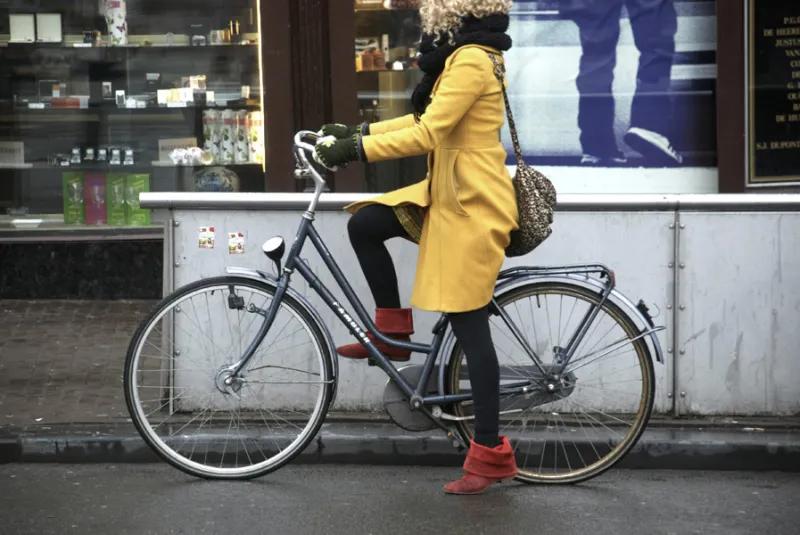
Photo: Gary Mark Smith, CC BY-SA 3.0, via Wikimedia Commons
Most people who say they can't commute by bike in Harrogate aren't worried about the miles. Ten minutes from Starbeck, fifteen from Bilton, half an hour from Knaresborough if you take it steady — the distance was never the sticking point. What puts them off is the imagined scene at the other end: a locked toilet cubicle, a shirt that's spent forty minutes folded into a rucksack, and a face the colour of a postbox.
An e-bike doesn't automatically solve that. It just moves the question from "can I make it?" to "can I make it without needing a shower?" And with a bit of thought, the answer is usually yes. Not because the motor does the work for you, but because it lets you climb Harrogate's hills at a speed low enough to keep your engine cool. That's the whole trick, and everything below is really just detail hung on it.
Set the assist before you turn a pedal
There's a temptation to treat the power modes like gears — nudge up to turbo on the incline, drop to eco on the flat. That's exactly the pattern that gets you hot, because every change is a surge and every surge costs you.
Pick a middle setting and leave it there for the whole ride. On most bikes that's tour or the second of four modes. Then ride at a steady, slightly quicker cadence than feels natural — around 75 to 80 turns a minute on a crank-drive bike — in a lower gear than you'd choose unassisted. You're contributing enough to feel like you're pedalling, and the motor is smoothing out the rest. It's a strange sensation for the first week, like riding with a gentle tailwind that never quite drops.
Two habits worth building. First, pull away in a low gear and let the assist bring you up to speed rather than stamping on the pedals from a standing start at the Empress roundabout lights. Second, ease off two or three hundred metres before you stop. Coasting into the bike rack costs you nothing and gives your body a head start on cooling down.
Choose the flat line, not the fast one
This is where most commuters lose the argument with themselves. The obvious route into town is rarely the one that keeps you dry, and the difference is usually less than two minutes.
From Bilton, the pull up Skipton Road is a proper grind. The lanes and the old railway line to the west will take you in at a fraction of the effort, and you arrive on the Stray side rather than into traffic. From Starbeck, the natural line drops you along the valley rather than up through the residential rises, and the last stretch past the Stray is flat enough to spin out your legs. From Knaresborough, resist the urge to race the traffic on the main road — the signed route through the Starbeck side is slower on paper and quicker in practice, because you're not stopping every hundred metres.
From the south, Pannal and Oatlands commuters face the long drag of Leeds Road. There's no magic answer there, but dropping a street back and taking the gentler run past the Stray perimeter does take the sting out of it. Hornbeam Park riders have the easiest job of the lot — Hookstone and the back lanes are close to level, and the climb at the end is short enough to walk if you must.
Don't be precious about it either. If a route adds ninety seconds but removes five metres of climbing, take it every time. And if the last three hundred metres of your journey are uphill, get off and push. Walk mode exists. Nobody at the office is scoring you.
The other free cooling system is air. The faster you move, the more of it you get, which is why a steady twelve miles an hour beats a sprint-and-stop every time.
Keep the load off your back
A rucksack is the single most reliable way to arrive damp. Even a light one stops your back breathing, and in a Yorkshire October that means a wet patch you can't explain away.
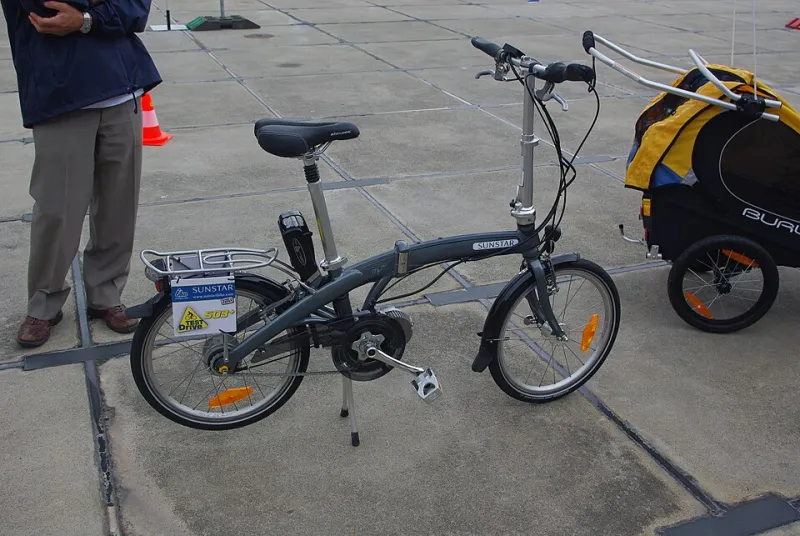
A rear rack and a single pannier is the fix, and one bag is enough for a laptop, a shirt and a lunch. If you genuinely can't fit a rack — some folding bikes, a few of the sleeker commuter models — a large bar bag or a frame bag is the next best thing. Anything that puts the weight on the bike rather than on you.
Dress for the second mile, not the first
The first three minutes of any commute in November are cold. That's normal, and it's a mistake to dress for it. Start slightly chilly and you'll be comfortable by the time you reach the end of the street.
A merino or synthetic base layer, a thin long-sleeve over the top, and a softshell on the outside is plenty for most of the year. Save the hardshell for actual rain — a waterproof jacket worn against a drizzle you didn't need to worry about turns into a sauna by mile two. If your jacket has vent zips, use them. If it has pit zips, use those too.
Gloves matter more than people expect. Cold hands make you grip the bars harder, which makes you tense, which makes you hot everywhere else. A thin pair of full-finger gloves from October to April is worth every penny.
The kit that earns its place in a desk drawer
Rather than carrying a wash bag every day, build a small stash at work and forget about it. A pack of face wipes, a travel deodorant, a comb, a microfibre hand towel, spare socks, and a spare shirt on the back of the chair. Top it up once a month.
A few things that make a real difference: a small can of dry shampoo if you have longer hair, a shoe deodoriser if you leave a pair of work shoes under the desk, and a plastic bag for anything wet. Keep a spare base layer in the drawer too — not for the ride in, but for the day you get caught out at lunchtime.
The last five minutes do the heavy lifting
Arriving five minutes early and spending three of them walking is worth more than any gadget. Coast the final stretch, lock the bike up outdoors, and stand still for a minute before you go in. Your body has a lot of heat to shed, and it will do it faster in cool air than in a stairwell.
If you're on the top floor of a Harrogate town-centre office, that's a factor too. Ask about ground-floor bike storage, and if there isn't any, factor the stairs into your timing rather than your shirt.
The honest caveat
There will be days — a July heatwave, a headwind all the way up the valley, a genuinely long commute — when no amount of assist strategy will save you. On those days, the answer is a spare shirt and a flannel, not a shower. That's fine. The point isn't to arrive immaculate; it's to arrive without needing a change of plan. Get the route and the assist right, and nine mornings out of ten you'll walk in looking like you drove.