The Forecourt Can't Tell You This: A Harrogate E-Bike Test Loop That Actually Says Something
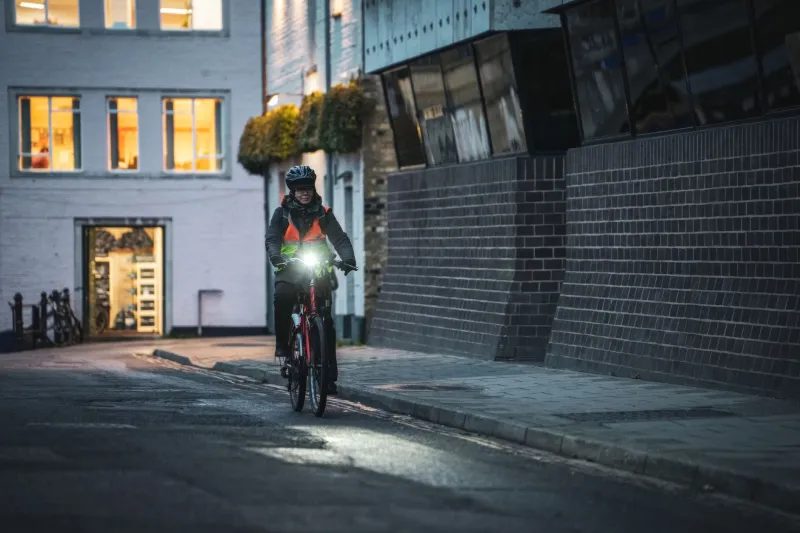
Most e-bike test rides around Harrogate last about as long as a coffee order. You sign a form, get a helmet, wobble around a retail park car park and come back convinced that every bike is brilliant. It is not your fault. A flat, smooth, traffic-free car park flatters every motor, every brake and every saddle. It tells you almost nothing about the bike you will actually live with on Otley Road in February.
This is where a repeatable test loop earns its keep. The route below takes roughly twenty to twenty-five minutes at a relaxed pace. It includes a proper climb, a scrappy back lane, a stretch of town traffic and enough damp tarmac to test the brakes. Ride the same loop on every candidate and the differences stop hiding.
Why the forecourt flatters everything
A car park is the e-bike equivalent of a showroom sofa. It feels fine for the first minute because nothing is being asked of it. There is no gradient to expose a motor that surges or fades. There are no potholes to reveal a harsh frame or a rattly mudguard. There is no traffic to show whether the bike is nimble at walking pace or whether the bars are so wide you flinch at every gap.
Harrogate riding is not a car park. Even a short commute from Bilton or Starbeck can serve up a drag, a wet descent, a bus, a delivery van and a road surface that has spent the winter being used as a grit tray. You need a test ride that includes some of that, without turning into an audition for the Tour de Yorkshire.
The loop at a glance
Start near West Park, where there is space to get clipped in and a sensible chance to join traffic without drama. Head up Otley Road towards Harlow Carr, keeping the effort steady rather than sprinting. Take the climb at your normal commuting pace, not in a heroic gear you would never use again.
From there, loop onto Crag Lane and the quieter lanes around Harlow Carr, then return via Cold Bath Road and back towards West Park. You get a climb, broken surfaces, a descent and a taste of town traffic. If the shop suggests a different starting point, fine. The important thing is that the loop contains the same four ingredients every time.
Checkpoint one: the climb on Otley Road
The climb is where the motor shows its manners. Does the assistance arrive smoothly, or does it lurch the moment you turn the pedals? Can you hold an easy cadence, or are you stuck between a gear that is too hard and a motor setting that is too eager? If the bike has a torque sensor, the difference is usually obvious within a few hundred metres. If it has a cadence sensor, you may notice a slight delay before the power catches up.
Try the bike in a low assist mode first, then a higher one. You are not looking for the fastest climb. You are looking for control. A good commuting e-bike should make the climb feel manageable without turning every pedal stroke into a surge. If you have to drop to the easiest gear and the motor still feels like it is shoving you forward, that is worth noting. If the bike feels front-heavy or vague on the climb, note that too.
Checkpoint two: the gritty back lane
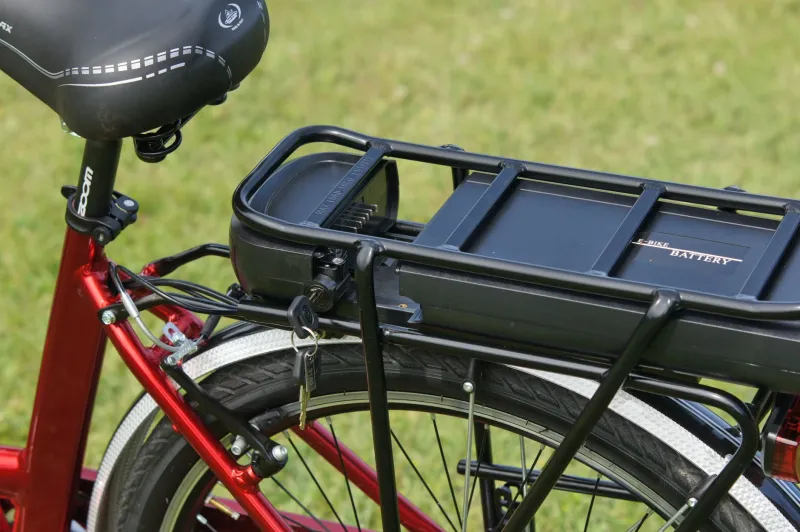
Crag Lane and the lanes around Harlow Carr are not a velodrome. That is the point. Listen for rattles from mudguards, racks, lights and battery mounts. Feel how the tyres handle grit and patchy tarmac. Does the bike track straight, or does it skip about? Are the bars comfortable, or are your wrists already complaining?
This is also where practical bits show themselves. Do the mudguards actually cover the tyre, or will your shoes get a winter rinse? Is there room for a rack and panniers? Are the lights wired in, or are they the sort that disappear into a drawer? A bike can be fun for twenty minutes and still be wrong for a Yorkshire winter. This lane is where you start to find out.
Checkpoint three: town traffic
Back in town, the bike has to do the unglamorous work. Stop-start traffic, tight junctions, pedestrians near the Stray and the general business of getting through Harrogate without feeling like a liability. At low speed, does the motor cut in cleanly? Can you paddle the bike around a corner or a parked car without feeling the weight? Are the brakes easy to feather, or are they on or off?
Do not overlook the simple stuff. Can you reach the controls without looking down? Is the display readable in daylight? Does the bike feel stable when you glance over your shoulder? If you are buying for a commute, these small points matter more than a fancy spec sheet. If you are buying for leisure, they still matter every time you stop at a café or a level crossing.
Checkpoint four: the wet-weather braking check
Find a quiet, flat side street and do a controlled stop from a sensible speed. Not an emergency stop. Not a handful of front brake on a bend. Just a smooth, progressive squeeze to see how the brakes feel in the damp. Note the lever feel, the noise and whether the bike pulls up straight. On a descent, a good brake should feel consistent rather than grabby or wooden.
Most e-bikes now come with disc brakes, which is a sensible starting point for Harrogate winters. But discs are not all equal. Rotor size, pad compound and setup all make a difference. If the brakes howl, pulse or feel vague on a short damp loop, ask about it. You are not being fussy. You are testing the bit of the bike that has to work when the weather is grim and the traffic is not.
What to take on the test ride
Bring your normal helmet, your normal shoes and a phone with a note app. If you use a pannier, a child seat or a trailer, ask whether you can test with something similar. Take a photo of the bike and jot down a few scores after the ride: motor smoothness, gearing, comfort, brakes, confidence at low speed and practical extras. Then ride the next bike on the same loop.
Ask the shop to set the bike in a sensible everyday mode rather than leaving it in the highest setting. You want to know what the bike is like when you are tired, loaded and not in the mood for a test. If a shop will not let you take a short supervised loop, that is useful information too.
The honest question at the end
When you get back, do not ask whether the bike was fun. Most e-bikes are fun for twenty minutes. Ask whether you would ride it again tomorrow in the rain. Would you be happy lifting it onto a rack, charging it in a hallway or squeezing it through a side gate? Would you choose it for a quick errand when the car keys are right there?
The bike that wins is rarely the one that feels fastest up Otley Road. It is the one that makes the ordinary Harrogate ride feel easy, safe and repeatable. That is a much better test than a lap of the forecourt.